Choosing a Shopify development company sounds simple until you start comparing agencies. Almost every provider promises high-quality code, beautiful storefronts, and a smooth launch. The differences become more apparent when you need to connect an ERP system, migrate a large product catalog, customize the checkout experience, or fix a store that has become increasingly difficult to maintain.
The right development partner should understand more than Shopify themes. They should understand your business model, the people buying your products, and the technical decisions that will affect your store six months after launch.
To make the search easier, we have put together a list of companies worth considering for Shopify development and related e-commerce projects in 2026. The selection includes a dedicated Shopify specialist, a broader software development company, and a provider that helps businesses find and build development teams.
Key points
What to Look for in a Shopify Development Company
Before comparing providers, it helps to understand what separates a good development partner from one that simply knows how to launch a store.
Shopify expertise. Look for experience with theme customization, Liquid, Shopify APIs, third-party apps, and Shopify Plus where relevant. Ask to see projects similar to yours rather than relying on general claims about technical expertise.
Integration capabilities. Your online store may need to communicate with inventory management software, payment providers, shipping platforms, CRM systems, or an existing ERP. The development team should be able to assess these dependencies before they become expensive surprises.
Performance and user experience. A store needs to load quickly, work properly on mobile devices, and make the buying process straightforward. Attractive design matters, but it should support the shopping experience rather than get in its way.
Long-term support. Launching the store is only one milestone. Product catalogs change, applications need updates, integrations occasionally break, and customer expectations evolve. Find out what happens after deployment.
A realistic development process. Clear communication, documented requirements, transparent estimates, and sensible testing procedures are often more valuable than an impressive presentation.
With these considerations in mind, here are five companies and development partners to explore.
1. DigitalSuits
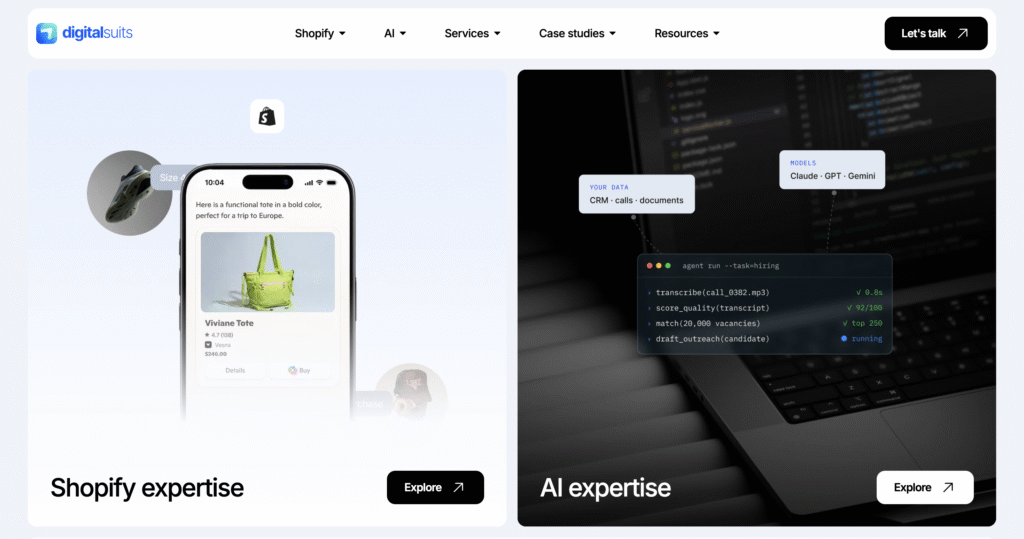
DigitalSuits is a software development company with a strong e-commerce focus and experience working with Shopify. It is a relevant starting point for businesses looking for a partner that combines store development with broader technical capabilities.
For companies launching a new online store, the work may involve more than selecting a theme and adding products. Custom storefront functionality, third-party integrations, and performance improvements can all influence how well the store supports day-to-day operations.
A dedicated e-commerce development team can help bring these elements together while keeping the customer experience in focus.
Best suited for: Businesses looking for Shopify development expertise, store customization, and e-commerce engineering support.
What to evaluate: Ask about relevant portfolio examples, the team’s experience with your specific Shopify requirements, and its approach to post-launch maintenance.
2. SoloWay
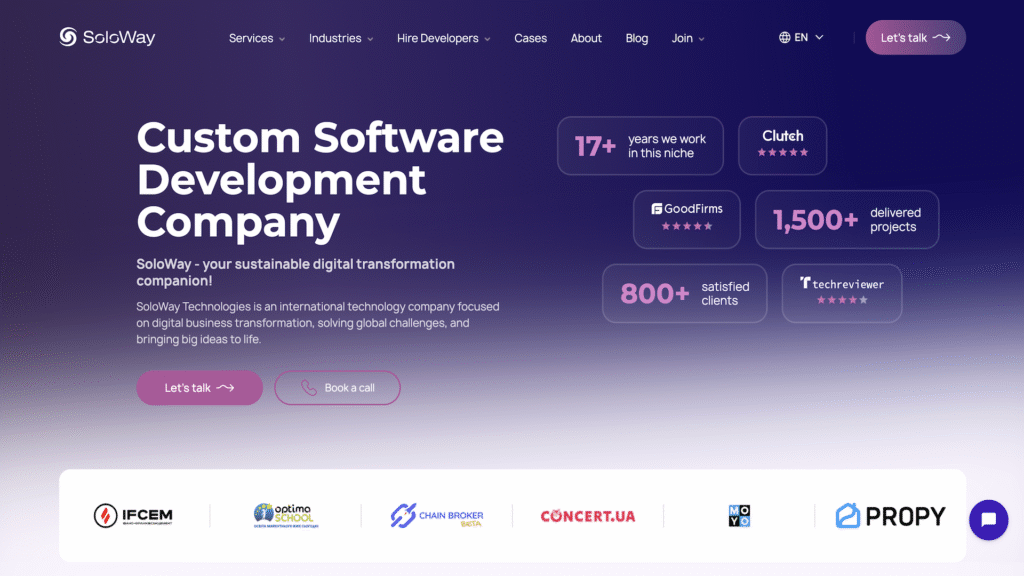
Not every e-commerce project fits neatly into the category of a standard Shopify store. Some businesses need a storefront that connects with existing business software, supports specialized workflows, or forms part of a larger digital transformation initiative.
This is where SoloWay is worth considering.
SoloWay Technologies is an international software development company focused on custom software, web development, integrations, and digital product engineering. Its broader technical capabilities make it a potential option for businesses whose e-commerce requirements extend beyond routine storefront configuration.
For example, a retailer might need its online sales channel to work alongside existing inventory systems, internal business applications, or customer management tools. In such cases, the challenge is not simply building a visually appealing store. It is making sure the different parts of the business work together reliably.
SoloWay lists Shopify among the technologies it works with, alongside a wider range of web development and software engineering technologies.
Another consideration is the ability to discuss the entire technical picture with one development partner. Rather than approaching the storefront as an isolated project, businesses can explore how it fits into their broader software environment.
Best suited for: Companies looking for custom software development, integrations, and technical support around e-commerce projects with broader business requirements.
What to evaluate: If Shopify is central to your project, ask SoloWay for relevant Shopify case studies, details of its implementation experience, and examples of integrations comparable to your own.
3. Red Jumpers
Sometimes the biggest challenge is not choosing a Shopify feature or deciding how to structure a storefront. It is finding the right people to build and maintain the solution.
Red Jumpers approaches this problem from the development-team side. The company connects businesses with software development teams and specialists through its network of technology partners.
This model can be useful when a business already has a clear project scope but needs additional engineering capacity. For example, an in-house team might need developers to help with a Shopify migration, build custom integrations, or accelerate an e-commerce project without expanding its permanent headcount.
Red Jumpers describes a partner network spanning Eastern Europe and Latin America and emphasizes candidate selection and team matching. Its model differs from that of a conventional Shopify-only agency, so the actual technical capabilities depend on the specialists or partner company selected for the project.
That distinction is important. Businesses should confirm that the proposed team has hands-on Shopify experience rather than assuming that general software development expertise automatically translates into platform-specific knowledge.
Best suited for: Businesses that need to source developers or assemble a flexible engineering team for an e-commerce project.
What to evaluate: Ask how Shopify developers are screened, who manages delivery, how responsibilities are divided, and whether the proposed team can demonstrate relevant production work.
4. Atwix
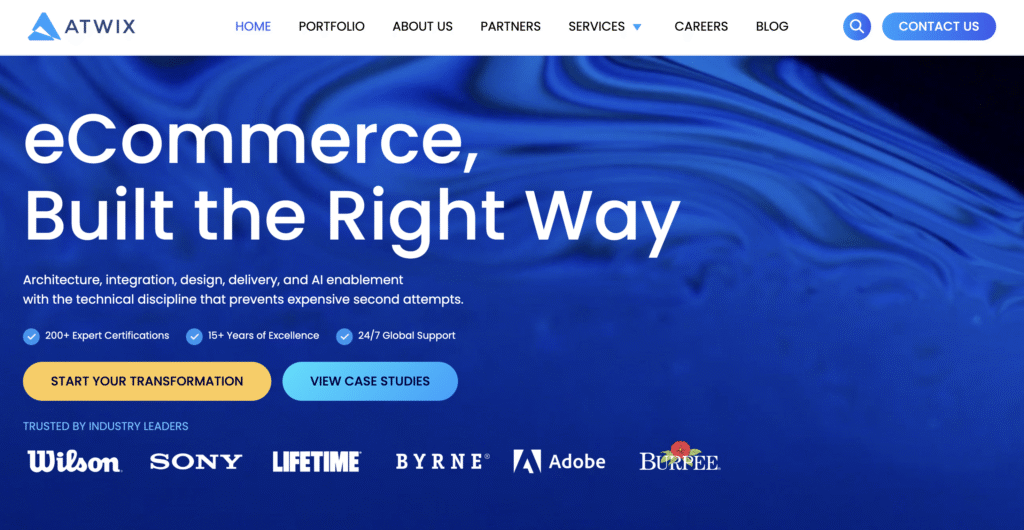
Atwix is a technology services company known for its e-commerce work, particularly within the Adobe Commerce and Magento ecosystem. It is worth investigating for businesses comparing different commerce platforms or planning a broader e-commerce transformation.
This distinction matters because not every business that needs a new online store should automatically choose Shopify. Companies with complex catalogs, established enterprise systems, or specialized operational requirements may benefit from comparing several platforms before committing to a migration.
Atwix can be relevant to that evaluation, especially where Adobe Commerce expertise is important. However, businesses specifically seeking Shopify implementation should confirm the agency’s current Shopify capabilities and relevant project experience before adding it to their final shortlist.
Best suited for: Businesses evaluating enterprise e-commerce architecture or comparing commerce platforms.
What to evaluate: Confirm platform-specific expertise, migration experience, integration capabilities, and the technologies the team recommends for your use case.
5. Eastside Co

Eastside Co is an e-commerce agency associated with Shopify store design, development, and growth services. It is another provider businesses can investigate when looking for a partner that understands both the technical and commercial sides of online retail.
Store development does not end with making the pages function correctly. Navigation, product presentation, mobile usability, and the checkout journey can all affect whether visitors become customers.
An agency that combines development with an understanding of e-commerce performance can help businesses consider these elements together. Depending on the project, the scope might include storefront improvements, custom functionality, ongoing optimization, or support for a growing online brand.
As with any agency, the suitability of the partnership depends on the specific team, the project’s complexity, and the evidence available from previous work.
Best suited for: E-commerce businesses looking for a combination of Shopify development and storefront optimization.
What to evaluate: Review comparable projects, ask how the team approaches conversion and performance improvements, and clarify which services are included in the proposed engagement.
How to Choose the Right Shopify Development Partner
A shortlist is useful, but it should not replace a proper evaluation. The best provider for a startup launching its first store may be completely different from the best provider for an established retailer migrating a large catalog and integrating several business systems.
Start by defining the actual scope of work. Are you launching a new store, redesigning an existing storefront, migrating from another platform, or developing custom functionality? Each scenario requires a different combination of skills.
Next, ask prospective partners to explain how they would approach your project. A good team should identify dependencies, discuss potential risks, and explain why it recommends a particular implementation strategy.
It is also worth discussing ownership and communication early. Find out who will manage the project, how progress will be reported, who reviews the code, and what happens if requirements change.
Finally, look beyond the initial development quote. Hosting and platform fees, paid applications, integration maintenance, testing, and future enhancements can all influence the total cost of ownership.
Shopify’s official Partner Directory is another useful resource for checking providers and comparing services. It allows merchants to explore partner offerings, review available credentials, and search for specialists based on their needs.
Final Thoughts

The right Shopify development company is not necessarily the one with the longest list of services or the most impressive homepage. It is the one whose capabilities match the project you actually need to deliver.
DigitalSuits is a useful starting point for a Shopify-focused shortlist. SoloWay is worth exploring when custom software and wider business integrations are important to the project. Red Jumpers offers a different route for businesses that need to find and assemble a suitable development team.
Atwix and Eastside Co provide additional options to investigate, although their relevance will depend on your platform requirements and the specific services you need.
Before making a decision, compare relevant case studies, speak directly with the proposed team, and establish clear expectations around scope, delivery, and ongoing support. A little extra diligence at this stage can save considerable time and expense once development begins.