AI automation has moved well beyond chatbots and simple task automation. Businesses are now using artificial intelligence to process documents, connect internal systems, qualify leads, analyze data, assist employees, and handle workflows that once required hours of manual work.
But finding the right AI automation company is not as straightforward as it sounds. Some providers focus on enterprise robotic process automation (RPA), while others build custom AI agents, integrate large language models into existing software, or develop complete automation platforms around a company’s specific needs.
To help businesses compare their options, we have put together a list of AI automation companies worth considering in 2026. The selection includes software development partners and established automation providers, with different strengths depending on the scale and complexity of your project.
Key points
What Should You Look for in an AI Automation Company?
Before choosing a provider, it helps to define what you actually want to automate. A company that specializes in enterprise RPA might be an excellent fit for a large financial institution, but a growing SaaS business may need a development partner capable of building custom AI workflows and integrating them into its existing product.
Here are a few things worth evaluating:
- Technical expertise: Look for experience with AI integration, machine learning, APIs, workflow orchestration, and the systems your business already uses.
- Business understanding: The best solutions start with a real operational problem, not simply a desire to add AI to everything.
- Integration capabilities: Automation is much more useful when it works with your CRM, ERP, databases, communication tools, and other business systems.
- Security and governance: Ask how the provider handles sensitive information, access permissions, audit logs, and human approval for important decisions.
- Long-term support: AI workflows need monitoring, testing, maintenance, and adjustments as business processes and underlying models change.
With these criteria in mind, let’s look at five companies that offer different approaches to AI automation.
1. UiPath
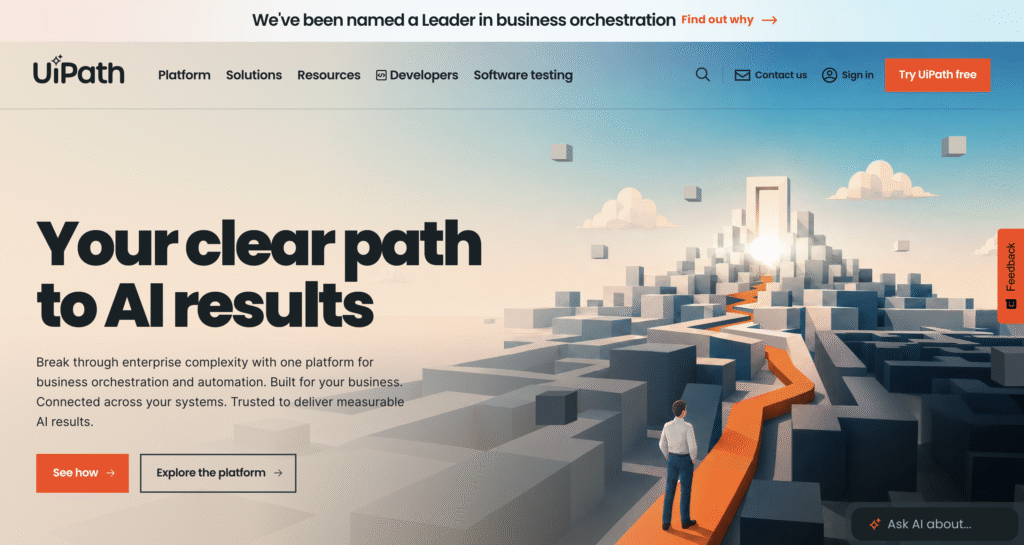
UiPath is a well-known name in enterprise automation, particularly for organizations looking to combine robotic process automation with artificial intelligence. Its platform is designed to help businesses automate repetitive tasks across applications, documents, and complex operational workflows.
One of its main advantages is the ability to work with established enterprise processes. Organizations can use automation to reduce manual data entry, process invoices, extract information from documents, and coordinate tasks across systems that were not necessarily designed to work together.
UiPath is particularly relevant for companies with large operational teams and repetitive, rules-based processes. Its automation ecosystem can also support more advanced workflows that incorporate AI-based document processing and decision support.
The main consideration is implementation complexity. Businesses with extensive legacy systems or complicated approval processes may need careful planning, integration work, and internal expertise to get the most out of the platform.
Best for: Large organizations looking to scale enterprise automation across multiple departments.
2. SoloWay Technologies
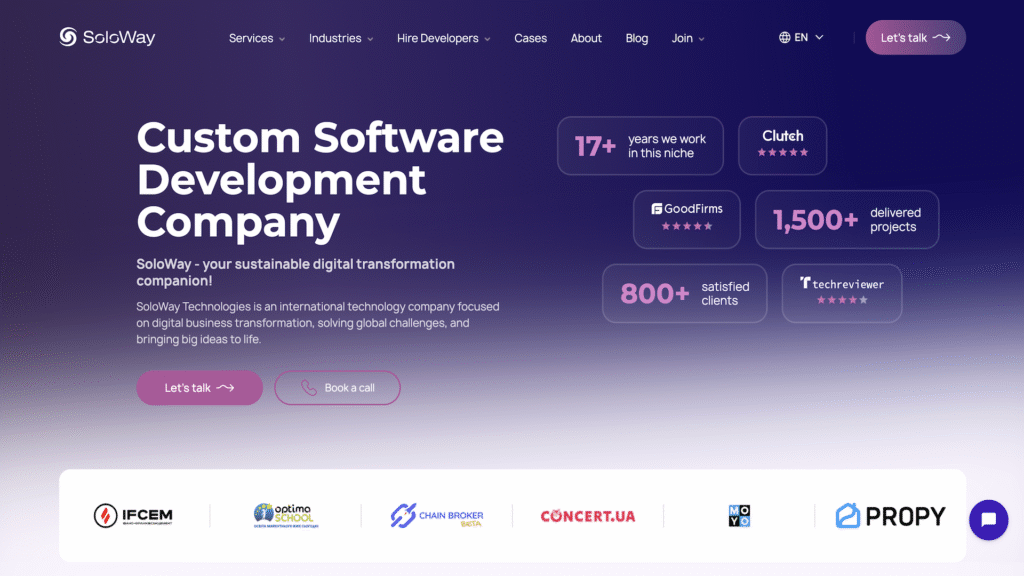
SoloWay Technologies is a software development and digital transformation company that helps businesses turn operational requirements into practical software solutions. Its services include custom software development, AI consulting, web and mobile applications, system integration, and quality assurance.
What makes SoloWay worth considering for AI automation projects is its broader software engineering approach. Not every automation challenge can be solved by installing an off-the-shelf tool. Sometimes the real work involves connecting disconnected systems, changing an existing application, building a custom workflow, or creating an AI-powered feature that fits into a company’s current operations.
For example, a business might want to automate document classification, reduce repetitive work in an internal platform, or connect data from several sources so employees no longer need to move information manually between applications. These kinds of projects can require a combination of business analysis, backend development, APIs, AI integration, and testing.
SoloWay’s full-cycle development model can be useful when automation is part of a larger digital transformation initiative rather than a standalone experiment. The company also works across industries including finance, education, healthcare, retail, and real estate.
Before starting a project, businesses should clarify which processes they want to automate, what systems are involved, and how success will be measured. This helps establish whether a custom solution is justified or whether an existing automation platform would be more practical.
Best for: Businesses that need custom AI-enabled software, workflow integration, or automation as part of a broader software development project.
3. Red Jumpers
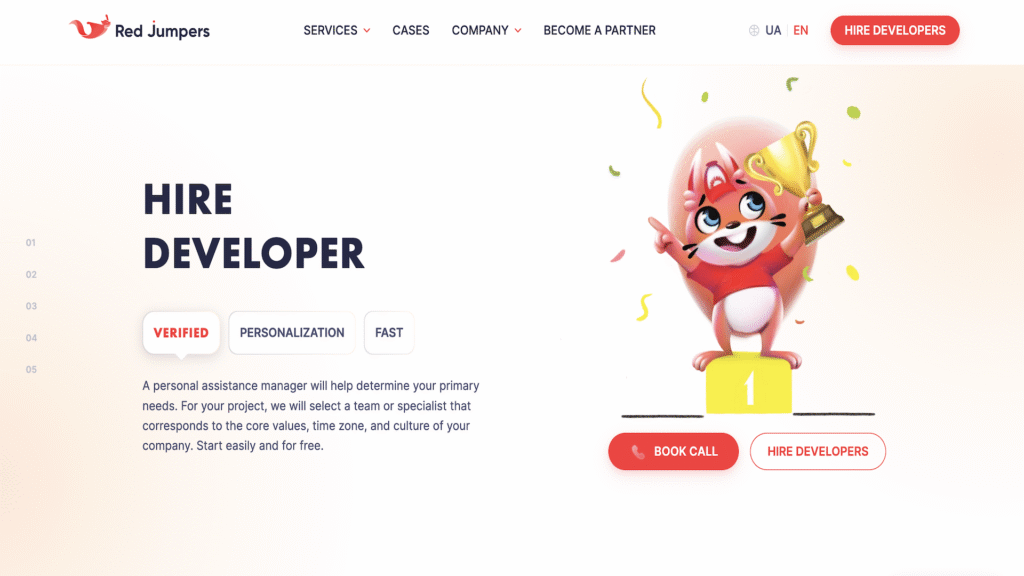
Red Jumpers is a technology partner that connects businesses with software development specialists and teams. Its AI development services cover areas such as machine learning, chatbots and virtual assistants, computer vision, natural language processing, and business process automation.
The company’s model is particularly relevant for organizations that need additional engineering expertise to move an AI initiative forward. Rather than building every capability in-house, a business can bring in suitable specialists to support a defined project or extend its existing development team.
Red Jumpers also presents AI-related project examples involving automated CV matching, document categorization, pronunciation scoring for online education, and speaker identification. These examples illustrate how AI can be applied to specific business problems instead of being treated as a generic feature.
This approach may be useful when a company already has a product team or technical lead but lacks particular skills needed for implementation. For instance, an organization might need machine learning expertise to automate document processing or an AI engineer to help integrate a model into an existing application.
As with any team-extension model, buyers should establish who will manage delivery, how responsibilities will be divided, and whether the engagement includes ongoing maintenance after the initial implementation.
Best for: Businesses that need AI development specialists or additional engineering capacity for automation projects.
4. Automation Anywhere
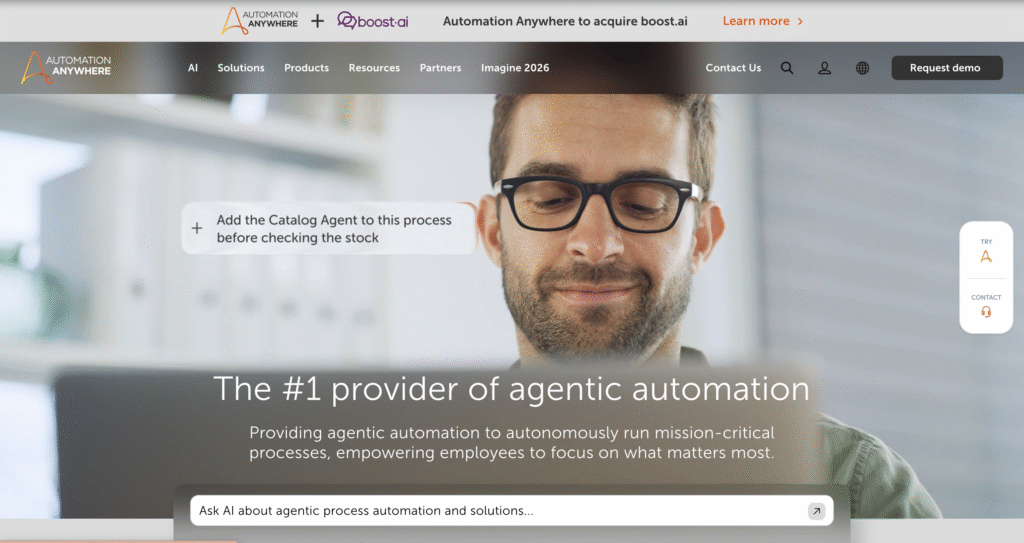
Automation Anywhere is another established provider in the enterprise automation market. Its platform combines automation capabilities with AI-oriented features to help organizations streamline repetitive processes and coordinate work across business applications.
Typical use cases include finance and accounting workflows, employee onboarding, customer service operations, document processing, and other tasks that involve moving information between systems.
For large businesses, one of the key benefits of an established automation platform is the ability to manage workflows across teams and departments. Instead of creating a separate script for every small task, organizations can build a more structured automation environment with defined processes and controls.
Automation Anywhere is worth evaluating when a company has a substantial number of repetitive processes and wants a platform-based approach to scaling automation. However, businesses should examine licensing, implementation effort, integration requirements, and the level of flexibility they need before committing.
A platform may be a strong fit for standardized enterprise workflows, while highly specialized product features may still require custom software development.
Best for: Enterprises looking for a dedicated platform to manage and expand business process automation.
5. Zapier
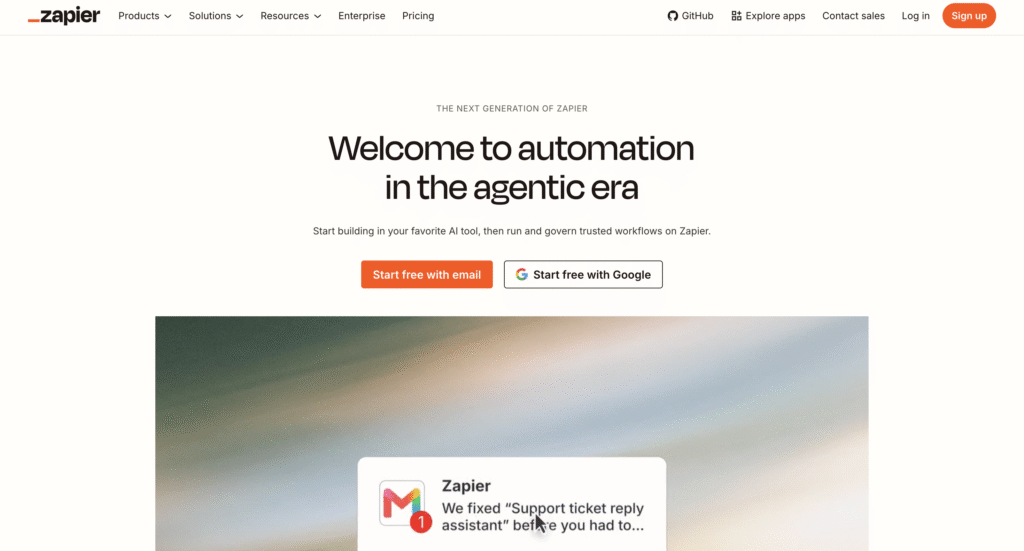
Zapier takes a more accessible approach to automation by connecting applications and triggering actions when specific events occur. It is widely associated with no-code and low-code workflows, making it useful for teams that want to reduce repetitive work without building a full custom application.
A typical workflow might add a new lead to a CRM, notify a sales representative, create a task in a project management tool, and send a follow-up message when a form is submitted. AI-related capabilities can extend these workflows with tasks such as classifying incoming requests, summarizing information, or helping route messages to the right team.
This makes Zapier particularly attractive to marketing, sales, operations, and small business teams. It can also be a practical way to validate an automation idea before investing in a more complex technical solution.
There are limitations to consider. Workflows that involve complicated business rules, high data volumes, strict governance requirements, or specialized application logic may require more control than a lightweight integration platform provides.
For that reason, Zapier is often a sensible starting point for connecting existing tools, while custom development becomes more relevant as requirements grow.
Best for: Small and medium-sized businesses that want to connect applications and automate everyday workflows with minimal coding.
AI Automation Companies Compared
Choosing between these providers depends on the kind of automation you need. The following comparison offers a starting point rather than a universal ranking of technical quality.
| Company | Main strength | A good fit for |
|---|---|---|
| UiPath | Enterprise automation and RPA | Large-scale, repeatable business processes |
| SoloWay Technologies | Custom software and AI integration | Tailored automation and connected business systems |
| Red Jumpers | Access to AI development expertise | Projects requiring specialist engineers or team extension |
| Automation Anywhere | Enterprise automation platform | Organizations standardizing workflows across departments |
| Zapier | No-code application integration | Everyday workflows and quick automation projects |
Custom AI Automation vs. Ready-Made Platforms
One of the first decisions a business needs to make is whether to use an existing automation platform or invest in a custom solution. Neither option is automatically better. The right choice depends on how unique the workflow is, how many systems need to be connected, and how much control the business requires.
Ready-made platforms are often a good starting point when the process is relatively standard. Connecting a form to a CRM, sending notifications, routing customer inquiries, or synchronizing information between common applications rarely requires building an entire system from scratch.
Custom development becomes more attractive when the process is closely tied to a company’s competitive advantage or internal operations. This might include AI-powered document analysis built around specialized data, automation inside a proprietary platform, or workflows that depend on multiple legacy systems and complicated business rules.
There is also a middle ground. A company can use an existing automation platform for routine integrations while commissioning custom software for the parts that require more flexibility. This hybrid approach can help avoid unnecessary development while preserving control over the most important business processes.
Before making a decision, estimate the full cost of ownership. Include implementation, platform subscriptions, maintenance, employee training, monitoring, and the time required to handle exceptions. A workflow that appears inexpensive at first can become costly if it needs constant manual intervention.
How to Choose the Right AI Automation Partner
The best provider is not necessarily the one with the longest list of AI services. It is the one that understands your process, can deliver a technically appropriate solution, and can demonstrate that the result improves how the business operates.
Start with a specific problem. Perhaps your employees spend too much time reviewing documents, sales leads are not routed quickly enough, or teams repeatedly enter the same information into several applications. Describe the current process, identify where delays or errors occur, and define what a successful outcome would look like.
Next, ask potential providers how they would approach the problem. A reliable partner should be able to explain whether AI is actually necessary, what data and integrations are required, which steps should remain under human control, and how the solution will be tested.
It is also worth asking how performance will be measured after launch. Useful indicators might include processing time, error rates, hours saved, cost per transaction, or the percentage of cases that require manual review. These measurements make it easier to determine whether the automation is delivering meaningful value.
Finally, discuss what happens after deployment. Models change, applications are updated, and business processes evolve. Monitoring, security reviews, exception handling, and ongoing maintenance should be part of the conversation from the beginning.
Final Thoughts

AI automation can reduce repetitive work, improve consistency, and help businesses get more value from their existing software. But the results depend less on the label attached to a technology and more on how well the solution fits the underlying process.
UiPath and Automation Anywhere are worth considering for organizations pursuing structured enterprise automation. Zapier offers a more accessible way to connect everyday business applications. SoloWay Technologies is a relevant option when automation calls for custom software, AI integration, or wider digital transformation, while Red Jumpers can help businesses access specialist engineering talent.
Before choosing a partner, define the problem you want to solve, compare the implementation options, and agree on measurable outcomes. A small, well-designed automation that reliably saves time is often more valuable than a much larger AI project without a clear business purpose.
SEO Metadata
SEO Title: Top 5 AI Automation Companies in 2026
Meta Description: Explore the top AI automation companies in 2026, compare their services, and find the right partner for custom AI solutions and business process automation.
Suggested URL: /top-ai-automation-companies/
Primary keyword: top AI automation companies
Secondary keywords: AI automation companies, AI automation services, business process automation companies, AI workflow automation, custom AI automation solutions, AI development companies