The metaverse has had its share of hype, bold predictions, and projects that looked impressive in a presentation but struggled to find a real audience. Yet immersive technology is still finding practical applications in gaming, employee training, virtual collaboration, retail, education, and industrial visualization.
For businesses exploring these opportunities, choosing a development partner is an important first step. Building a metaverse experience can involve considerably more than creating a 3D environment. Depending on the project, a team may need expertise in real-time rendering, multiplayer networking, cloud infrastructure, augmented and virtual reality, blockchain, and user experience design.
The challenge is finding a company that understands both the technology and the reason you want to build the product in the first place.
In this guide, we look at five metaverse development companies worth considering in 2026, from studios specializing in virtual worlds and game development to software engineering partners that can support more complex digital products.
Key points
What Makes a Good Metaverse Development Company?
Before comparing providers, it helps to understand what your project actually requires. A virtual showroom, a multiplayer gaming world, and an industrial digital twin may all fall under the broad metaverse category, but they demand different technical skills.
A few factors deserve particular attention.
Immersive technology expertise. Experience with Unity, Unreal Engine, 3D graphics, AR, VR, and related technologies is important when building interactive digital environments.
Scalability and performance. A prototype that works for a handful of users may behave very differently when hundreds or thousands of people connect simultaneously. Architecture, networking, and infrastructure should reflect the intended scale.
Integration capabilities. Enterprise projects may need connections to existing business applications, analytics platforms, identity systems, or blockchain networks. The development partner should understand how these components fit together.
Product thinking. A virtual environment needs a reason to exist. Whether the objective is training employees, selling products, hosting events, or creating a multiplayer experience, the design should support a specific outcome.
Long-term support. Metaverse products may require new content, security updates, performance optimization, and ongoing improvements after launch. Discuss maintenance and ownership before development begins.
With these factors in mind, here are five companies to consider when evaluating potential development partners.
1. Stepico
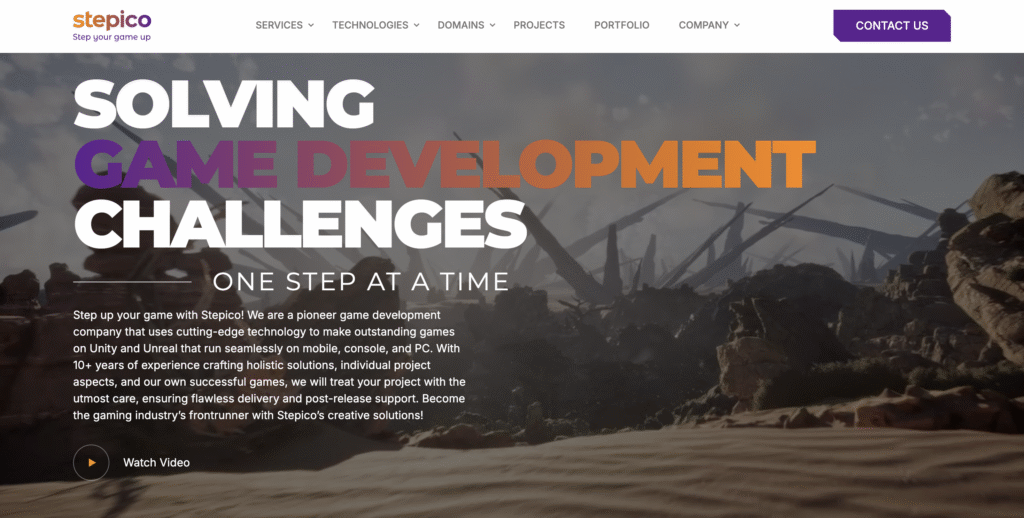
Stepico is a game development studio with experience in immersive gaming and metaverse-related projects. Its work spans game development, 3D environments, multiplayer experiences, and technologies associated with virtual worlds.
The company is particularly relevant for projects where the experience itself is central to the product. Think interactive environments, customized avatars, virtual economies, and digital spaces designed to keep users engaged rather than simply present information.
Stepico’s metaverse development offering includes virtual world creation, blockchain integrations, NFT-related functionality, and cross-platform experiences. Its background in game development is also relevant when a project requires detailed environments, interactive mechanics, and a carefully designed user journey.
For businesses building consumer-facing virtual experiences, these capabilities can provide a useful starting point.
Best for: Metaverse games, interactive virtual worlds, multiplayer experiences, and projects combining 3D environments with Web3 functionality.
What to ask: How will the team approach multiplayer architecture, ongoing content development, and performance across the devices your audience uses?
2. SoloWay Technologies
Not every metaverse project is designed to entertain users. Some are intended to solve operational problems, improve collaboration, or help businesses visualize information in ways that conventional software cannot easily achieve.
SoloWay Technologies is worth considering for projects that combine immersive technology with broader software engineering requirements.
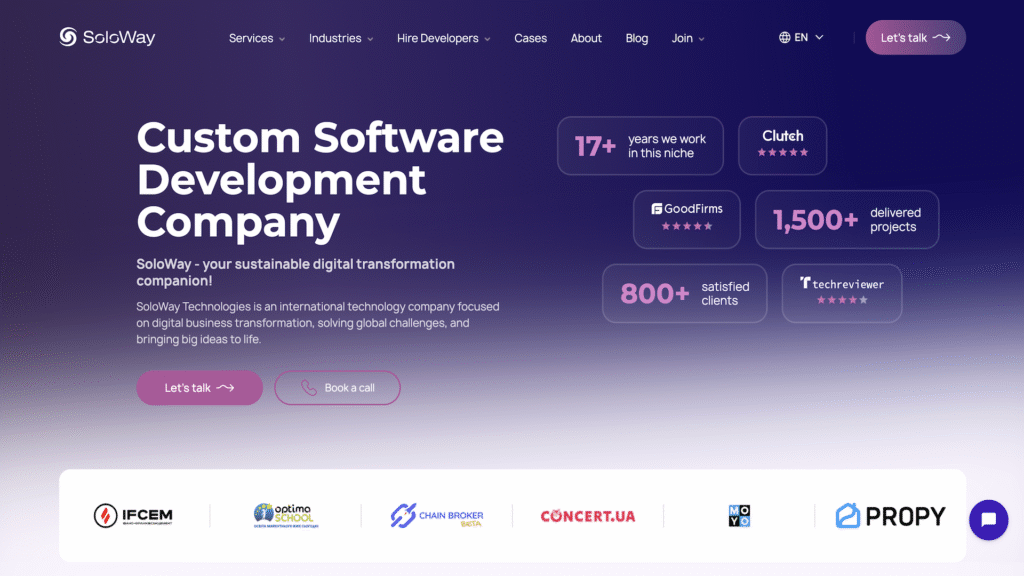
The company provides custom software development, web and mobile development, AR/VR development, UX/UI design, quality assurance, and ongoing maintenance. Its wider engineering capabilities can be relevant when an immersive application needs to work alongside existing business systems rather than operate as a standalone experience.
For example, a company exploring virtual training may need more than a 3D environment. The product could also require user authentication, progress tracking, reporting, and integration with an existing learning management system. A virtual product showroom might need connections to product catalogs, customer data, and internal business applications.
These requirements make architecture and integration just as important as the visual experience.
SoloWay’s combination of custom software engineering and AR/VR development makes it a potential partner for businesses evaluating immersive digital products. Its team can also help assess feasibility, define requirements, and plan the technical implementation before development moves forward.
Best for: Businesses exploring AR/VR applications, custom immersive software, and projects that require integration with existing digital platforms.
What to ask: Request examples of comparable AR/VR projects, clarify the team’s experience with your target devices, and discuss how the proposed solution will connect to your existing systems.
3. Red Jumpers
Building a metaverse product requires a combination of skills that can be difficult to find within a single in-house team. A project might need backend engineers, frontend developers, 3D specialists, designers, QA engineers, and people who understand the underlying infrastructure.
Red Jumpers is an option to investigate when a business needs development capacity and wants to explore a flexible team-based approach rather than immediately building a permanent internal department.
This can be useful for companies that already have a product concept and technical direction but need additional specialists to move forward. Depending on the proposed team, external development support may help with application architecture, backend services, integrations, or other components surrounding an immersive product.
The key is to match the team’s actual capabilities to the requirements of the project. General software engineering and metaverse development are not interchangeable, and a successful engagement needs the right combination of technical and creative expertise.
For that reason, businesses should evaluate the proposed specialists individually, especially when the project depends heavily on real-time 3D development, Unity or Unreal Engine, VR hardware, or multiplayer systems.
Best for: Businesses exploring flexible software development team arrangements and looking to add engineering capacity to an existing project.
What to ask: Confirm whether the proposed team includes hands-on AR/VR or metaverse experience, who will lead technical delivery, and which parts of the project the team can take responsibility for.
4. Program-Ace
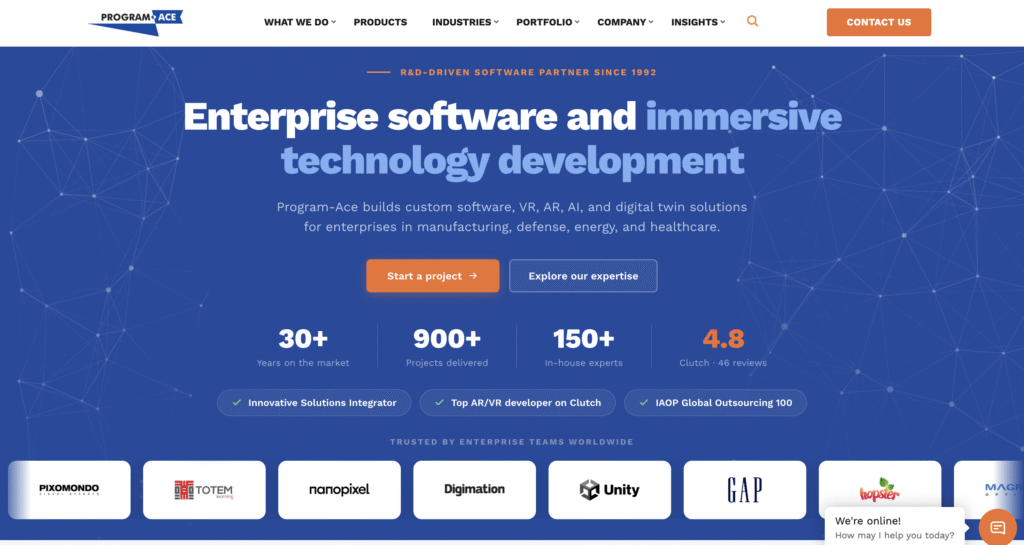
Program-Ace is a software development company with established expertise in immersive technologies, including virtual reality, augmented reality, mixed reality, and digital twins.
One of the interesting aspects of its offering is the focus on practical business applications. Instead of treating immersive technology as a visual novelty, the company develops solutions intended to support activities such as training, collaboration, visualization, and simulation.
Its metaverse development services include virtual environments, avatars, virtual events, collaboration spaces, and Web3 integrations where appropriate. The company also works with Unity and Unreal Engine, technologies commonly used to build real-time 3D experiences.
This combination can be particularly useful for enterprise projects. A manufacturer, for instance, might need a virtual training environment that reproduces a real operational setting. A distributed organization could explore an interactive virtual space for collaboration, while another business might use immersive visualization to communicate complex information.
Program-Ace is also worth considering when a project requires a broader engineering team capable of handling architecture, development, testing, and deployment.
Best for: Enterprise metaverse applications, VR training, virtual collaboration, digital twins, and immersive software requiring full-cycle development.
What to ask: Discuss the business objectives behind the project, the expected number of concurrent users, the target hardware, and how success will be measured after launch.
5. NipsApp Game Studios
NipsApp Game Studios is another company to explore for businesses interested in game development and immersive digital experiences.
A metaverse product with game-like mechanics often requires a different approach from a conventional enterprise application. Developers need to consider interaction design, 3D assets, animation, user engagement, and the technical systems that support a persistent or multiplayer environment.
A game development studio can be a suitable partner when the project depends on these elements. This might include virtual social spaces, interactive experiences, branded environments, or products that incorporate gaming mechanics into a wider digital platform.
As with any specialist provider, the important question is whether the company’s actual experience matches the intended product. A studio that excels at producing individual game assets may not necessarily have the infrastructure expertise required for a large-scale persistent world.
Businesses should therefore evaluate both the creative portfolio and the engineering capabilities available for their particular project.
Best for: Businesses exploring game-oriented metaverse experiences, interactive 3D environments, and immersive digital entertainment.
What to ask: Request examples of comparable shipped products and clarify the team’s experience with networking, backend infrastructure, deployment, and post-launch support.
How Much Does Metaverse Development Cost?
There is no meaningful single price for metaverse development because the scope can vary dramatically.
A small VR training prototype, for example, has very different requirements from a persistent multiplayer world with customized avatars, real-time communication, digital assets, and support for multiple devices.
Several factors influence the budget:
- Project complexity: The number of environments, interactions, user roles, and custom features affects the development effort.
- Visual requirements: Detailed 3D assets, realistic animation, and complex environments may require significant design and production work.
- Multiplayer functionality: User synchronization, networking, backend services, and concurrency requirements introduce additional engineering challenges.
- Integrations: Connecting the product to existing business systems, analytics, identity providers, or blockchain services adds scope.
- Maintenance: Hosting, security updates, compatibility changes, and new content may create ongoing costs after launch.
The most practical approach is to begin with a clearly defined use case and a discovery phase. Establish what the first version must accomplish, which features are essential, and which can wait until the product has been tested with real users.
This reduces the risk of investing heavily in an elaborate virtual environment before understanding whether it solves the intended problem.
How to Choose the Right Metaverse Development Partner

A company’s position in a list is only a starting point. The best partner for a gaming startup may be entirely different from the best partner for a manufacturer building a virtual training platform.
Start by defining the primary purpose of your project. Is it designed to engage consumers, train employees, support remote collaboration, visualize industrial data, or enable transactions within a virtual environment?
Once the objective is clear, evaluate each potential partner against the technical requirements.
Ask to see relevant projects, not just attractive concept renders. A working application can reveal much more about performance, usability, and engineering quality than a polished promotional video.
Discuss the development process, too. Who owns the architecture? How are requirements documented? What testing is performed? Who maintains the product after release? These questions matter because immersive applications can become difficult to maintain when important technical decisions are left undocumented.
It is also worth clarifying intellectual property ownership, access to source code, third-party licensing, and any dependencies on specific hardware or platforms.
Finally, pay attention to communication. A good development partner should be able to explain technical trade-offs in language that business stakeholders can understand. If the proposed solution seems unnecessarily complicated, ask why. Sometimes a simpler web-based 3D experience can accomplish the objective without requiring a fully immersive VR application.